In the shadowed corridors of ancient Indian mysticism, where mantra meets mystery and devotion brushes against dread, there exists a text whispered about rather than openly read. This text is the Nilavanti Granth, often called the Nilavanti Book. To some, it is a forgotten spiritual manuscript. To others, it is a dangerous relic that tests the reader’s fate.
Unlike sacred scriptures meant to guide the soul toward light, the Nilavanti Granth occupies a darker, more ambiguous space. It is historic, mystic, and unsettling. Its stories are not merely read; they are experienced, feared, and remembered.
This blog explores the origins, legends, symbolism, and lasting aura of the Nilavanti Granth, separating history from myth while preserving the chilling mystique that surrounds it.
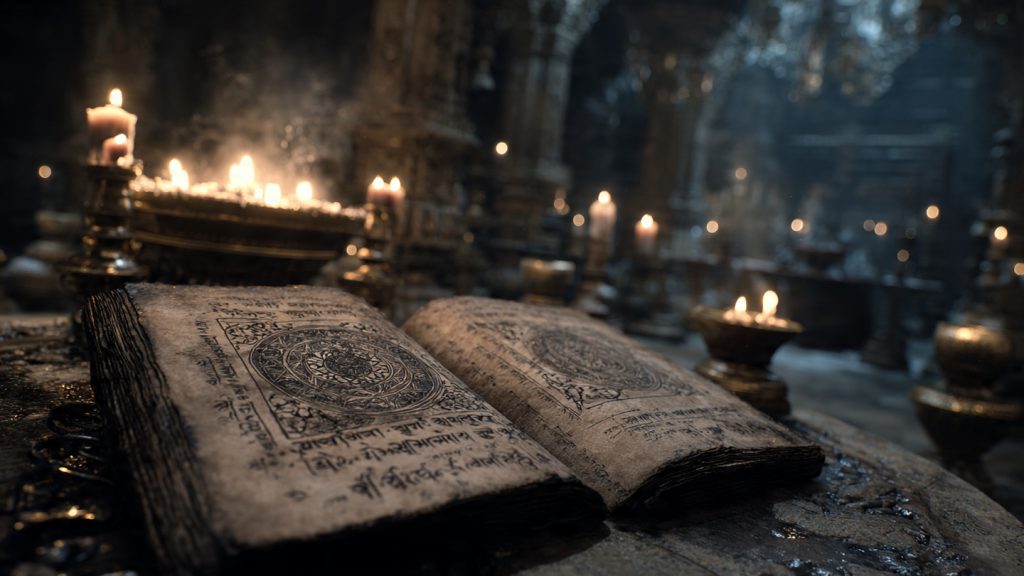
What Is the Nilavanti Granth?
The Nilavanti Granth is an ancient manuscript associated with tantric traditions, occult practices, and esoteric knowledge. The term Nilavanti is often linked to a powerful female entity or force, sometimes described as a sorceress, sometimes as a divine but wrathful presence.
The Nilavanti book is not a single standardized text. Instead, it exists in fragmented references, oral traditions, and rare handwritten manuscripts believed to have circulated secretly among select practitioners.
What makes the Nilavanti Granth unique is its reputation. It is not simply rare; it is considered forbidden by many.
The Historic Roots of Nilavanti Granth
Ancient India and the Rise of Forbidden Mystical Texts
India’s spiritual history is vast and layered. Alongside the Vedas, Upanishads, and Puranas existed parallel streams of knowledge rooted in tantra, alchemy, and ritual magic. The Nilavanti Granth is believed to belong to this shadowed stream.
Historians suggest that the Nilavanti book may have originated between the early medieval period and the later tantric renaissance, when secret knowledge was preserved through coded language and restricted transmission.
Why Was It Hidden?
Unlike mainstream scriptures, the Nilavanti Granth was never meant for public reading. It was:
- Passed only from guru to disciple
- Written in symbolic or cryptic language
- Protected by ritual warnings and conditions
This secrecy fueled its legend and helped it survive as much as a manuscript.
The Legend of Nilavanti: Woman, Witch, or Deity?
At the heart of the Nilavanti Granth lies the figure of Nilavanti herself.
Conflicting Identities
Different traditions describe Nilavanti in strikingly different ways:
- A powerful tantric woman who defied social and spiritual norms
- A guardian of forbidden knowledge
- A dark goddess testing human arrogance
- A cursed soul bound to the Granth itself
These contradictions only deepen the mystery. The Nilavanti book never clarifies her nature. Instead, it presents her as a force that mirrors the intent of the reader.
Why the Nilavanti Book Is Considered Dangerous
Warnings Within the Text
According to legend, the Nilavanti Granth contains explicit cautions. It is said that reading or chanting its passages without proper preparation can invite misfortune.
Stories speak of:
- Sudden illness
- Psychological disturbances
- Nightmares and recurring visions
- Unexplainable fear after reading
Whether symbolic or literal, these warnings ensured that only the most disciplined seekers approached the text.
The Power of Intention
In tantric philosophy, knowledge itself is neutral. Intention gives it direction. The Nilavanti book is believed to amplify desire, fear, and ambition. For an untrained mind, this amplification can be overwhelming.
Mystic Themes Hidden in the Nilavanti Granth
The Chants That Demand Silence, Preparation, and Fear
The Nilavanti Granth is said to contain mantras that do not promise comfort or peace. Instead, they confront the practitioner with their deepest shadows.
These mantras focus on:
- Control over fear
- Command of unseen forces
- Confrontation with mortality
- The thin line between power and destruction
Rituals of Transformation
Rather than worship, the Nilavanti book emphasizes transformation. Rituals described in the Granth often involve isolation, silence, and strict discipline. The goal is not enlightenment as commonly understood, but mastery over inner chaos.
Nilavanti Granth in Folklore and Oral Traditions
Village Legends and Midnight Stories
Across parts of India, especially in rural regions, stories of the Nilavanti Granth survive in hushed conversations. Elders speak of:
- Books wrapped in black cloth
- Manuscripts are buried to prevent misuse
- Temples where the Granth was once sealed away
These stories blur history and imagination, yet they persist with remarkable consistency.
Why Folklore Matters
Even if physical copies are rare, folklore keeps the Nilavanti book alive. It preserves emotional truth, fear, and reverence in ways written records cannot.
Is the Nilavanti Book Real or Pure Myth?
This question has no simple answer.
Scholars argue that the Nilavanti Granth may be:
- A symbolic text exaggerated by oral tradition
- A collection of multiple occult writings merged into one legend
- A real manuscript deliberately erased from history
The absence of concrete evidence only strengthens its mythic status. In mysticism, what cannot be proven often holds the most power.
Symbolism and Dark Philosophy of Nilavanti Granth
The Feminine Force Beyond Comfort
Nilavanti represents a feminine force that is not nurturing or gentle. She embodies destruction, independence, and raw truth. This challenges traditional spiritual narratives and makes the Nilavanti book deeply unsettling.
Knowledge Without Mercy
The Granth does not promise salvation. It offers clarity, often brutal. Readers are forced to confront their own limits, morality, and hunger for control.
Modern Fascination With the Nilavanti Granth
Why People Still Search for It
In an age of instant spirituality and simplified wisdom, the Nilavanti Granth feels dangerous and real. It does not cater to comfort.
Modern seekers are drawn to it because:
- It resists commercialization
- It carries a sense of risk
- It represents forbidden truth
Internet Myths and Misinformation
Today, many claim to possess the Nilavanti book. Most such claims are fabricated or heavily altered. Authenticity, if it exists, remains deeply hidden.
Should One Read the Nilavanti Granth?
Historically, the answer was no unless guided by a master. Symbolically, the Nilavanti Granth warns against seeking power without responsibility.
Whether real or metaphorical, its message is clear: some knowledge demands a price.
Final Thoughts: The Enduring Shadow of the Nilavanti Book
The Nilavanti Granth is more than a manuscript. It is a mirror reflecting humanity’s fascination with darkness, power, and forbidden wisdom. Its mystique lies not in what it reveals, but in what it withholds.
As long as curiosity exists, the Nilavanti book will remain alive in whispers, legends, and unanswered questions. It stands as a reminder that not all paths to knowledge are illuminated. Some are walked by candlelight, in silence, with fear as a companion.
And perhaps that is exactly how the Nilavanti Granth was meant to be remembered.
2. Why is the Nilavanti Granth banned in India?
There is no official legal ban recorded on the Nilavanti Granth by the Indian government. However, it is often described as “banned” due to social and religious discouragement. Traditional belief systems warned against its misuse, leading temples, gurus, and communities to restrict access and discourage public circulation.
3. What is the Nilavanti Granth book about?
The Nilavanti Granth book is believed to deal with occult knowledge, tantric rituals, powerful mantras, and symbolic narratives centered around the enigmatic figure of Nilavanti. Rather than moral teachings, it focuses on transformation, discipline, and confronting fear, which sets it apart from conventional spiritual texts.
4. What is the original Nilavanti Granth price?
The original Nilavanti Granth price cannot be definitively stated. Authentic manuscripts, if they exist, are not sold openly. Rare collectors claim that handwritten or privately held copies, when rumored to surface, are valued anywhere from ₹50,000 to several lakhs, depending on age, condition, and claimed authenticity. Most copies sold online are replicas or fictional adaptations.
5. Is the Nilavanti Granth available in English?
There is no verified complete Nilavanti Granth in English. Some translated excerpts and interpretations circulate online, but scholars agree these are modern reconstructions rather than faithful translations of an original manuscript.
6. Are there original photos of the Nilavanti Granth?
Claims of Nilavanti Granth original photos appear online from time to time, but none have been authenticated. Most images are artistic representations, recreated manuscripts, or unrelated ancient texts misattributed to Nilavanti Granth for attention.
7. What is the Nilavanti Granth story?
The Nilavanti Granth story revolves around Nilavanti, a powerful and feared figure associated with forbidden knowledge. Depending on the version, she is portrayed as a tantric woman, a mystical force, or a cursed guardian of secret wisdom. The story emphasizes consequence, intention, and the danger of uncontrolled desire for power.
8. Who wrote the Nilavanti Granth?
The author of the Nilavanti Granth is unknown. Like many esoteric works, it is believed to be either anonymously written or collectively developed over generations. Some traditions claim it was revealed rather than authored, reinforcing its supernatural reputation.
9. Is there an original Nilavanti Granth available today?
There is no publicly verified original Nilavanti Granth available for study or sale. Any claim of an “original” should be approached with caution. Most experts believe the true text, if it ever existed as a single manuscript, remains hidden or lost.
10. Is the Nilavanti Granth available in Hindi?
There is no confirmed complete Nilavanti Granth in Hindi. Some Hindi articles, retellings, and interpretations exist, but these are narrative explanations rather than direct reproductions of the original text.