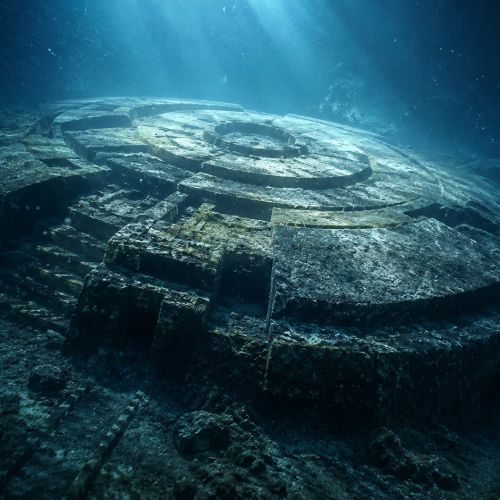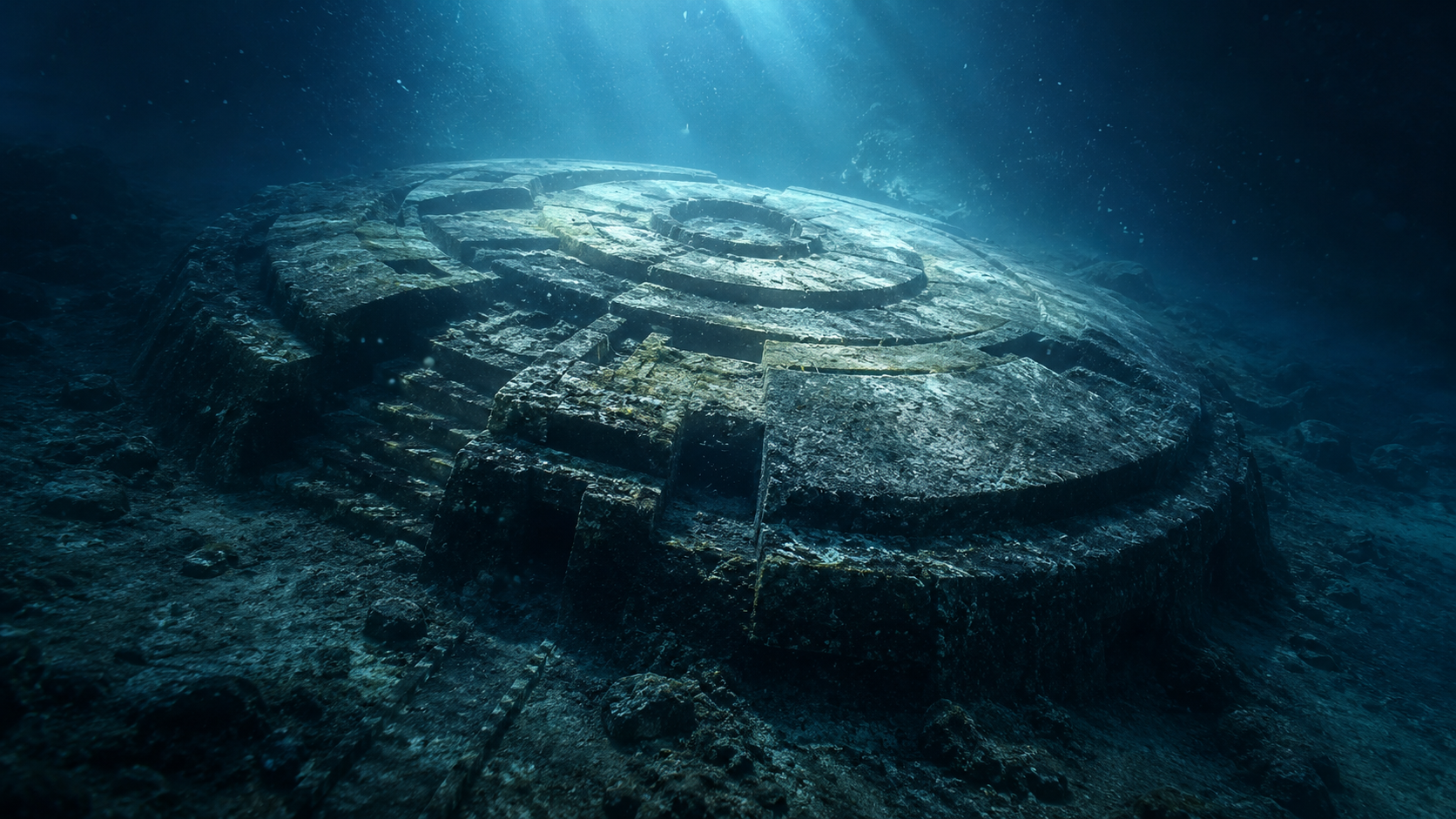
The world’s oceans still hide countless mysteries, but few discoveries have sparked as much debate as the Baltic Sea Anomaly. Discovered in 2011 beneath the cold waters of the Baltic Sea, this enormous circular structure continues to divide scientists, explorers, geologists, and mystery enthusiasts alike. Some believe it is nothing more than an unusual glacial rock formation, while others argue its geometric appearance, reported electronic interference, and unexplained features suggest something far more extraordinary.
More than a decade after its discovery, the Baltic Sea Anomaly remains one of the most searched underwater mysteries on the internet. As new underwater imaging technology and marine exploration techniques continue to improve, the object continues to raise important questions about geology, archaeology, and the unexplored depths of Earth’s oceans.
In this article, we examine the available evidence, separate documented facts from speculation, and explore why this mysterious underwater structure continues to fascinate researchers around the world.
What Is the Baltic Sea Anomaly?
Buried nearly 90 meters (295 feet) beneath the Baltic Sea, an enormous circular formation stretches across the seabed, standing as one of the most mysterious underwater discoveries ever documented. It was discovered in June 2011 by the Swedish marine exploration company Ocean X Team while conducting a sonar survey in search of historical shipwrecks.
The initial sonar image revealed what appeared to be a giant disc-shaped object measuring roughly 60 meters (197 feet) in diameter, resting on the seafloor. Even more intriguing was a long track-like formation extending behind the object, giving the appearance that something enormous had slid across the seabed before coming to rest.
The unusual shape immediately attracted global attention. Media outlets quickly compared it to science fiction spacecraft, while researchers urged caution, emphasizing that sonar images alone cannot determine an object’s origin.
Despite years of investigation, the anomaly remains one of the most debated underwater discoveries of the 21st century.
The Sonar Scan That Revealed the Baltic Sea Anomaly
One of the biggest reasons for the worldwide fascination is the object’s apparent geometry.
Early sonar scans appeared to show:
- Nearly perfect circular symmetry
- Sharp edges
- Straight lines
- Step-like formations
- Features resembling staircases
- Possible openings or recessed chambers
Such patterns naturally led many observers to question whether natural geological processes could create structures with this level of apparent precision.
However, marine geologists caution that sonar images can exaggerate shapes depending on viewing angles, sediment conditions, and processing techniques. Higher-resolution imaging has since revealed a more irregular surface than initially believed, though debate over its appearance continues.
Reports of Electronic Equipment Failure
Perhaps the most controversial aspect of the Baltic Sea Anomaly involves reports of electronic interference.
Divers associated with the exploration claimed that as their vessels approached within roughly 200 meters of the structure, several electronic systems—including satellite communication equipment, cameras, and navigation instruments—experienced temporary malfunctions.
According to these reports:
- Satellite phones reportedly stopped functioning.
- Certain underwater cameras temporarily failed.
- Navigation instruments allegedly behaved erratically.
- Equipment resumed normal operation after moving away from the site.
If accurate, these observations would represent highly unusual behavior because underwater rock formations are not generally known to generate localized electromagnetic interference strong enough to disrupt modern electronics.
It is important to note that these claims have not been independently verified through peer-reviewed scientific studies, and many researchers remain skeptical of the reported effects.
Could Natural Geology Explain the Formation?
Most professional geologists favor a natural explanation.
The Baltic Sea was heavily influenced by massive glaciers during the last Ice Age. As glaciers advanced and retreated, they deposited enormous quantities of rock, gravel, and sediment across the seafloor.
Several geological processes could potentially produce unusual formations, including:
- Glacial erosion
- Moraines
- Basalt outcrops
- Fractured bedrock
- Differential weathering
- Ice movement over ancient rock surfaces
Scientists who have examined rock samples collected near the anomaly have suggested they resemble ordinary granite, sandstone, and other geological materials common throughout the Baltic region.
Some researchers have even described the structure as a naturally occurring glacial deposit shaped by thousands of years of erosion.
Yet critics argue that this explanation struggles to account for some of the object’s apparent geometric characteristics observed in sonar imagery.
The Engineering Hypothesis
Alternative researchers believe the Baltic Sea Anomaly deserves far more investigation.
Several features have fueled speculation:
- Apparent right angles
- Circular perimeter
- Step-like terraces
- Flat surfaces
- A long “runway” extending behind the formation
Supporters of this hypothesis suggest these characteristics resemble engineered architecture rather than random geological formations.
Some have even proposed that the object could represent:
- A prehistoric underwater monument
- An ancient harbor installation
- A submerged ceremonial platform
- A relic from a forgotten civilization
At present, however, no conclusive archaeological evidence has confirmed human construction.
Metallic Sediments and Mineral Composition
Another intriguing aspect involves sediment samples reportedly collected during various expeditions.
Some investigators have claimed the surrounding sediments contain unusually dense mineral concentrations and traces of metallic compounds that differ from nearby seabed material.
A natural explanation is still plausible, as the Baltic Sea’s seabed is composed of a wide variety of geological formations and mineral deposits that have developed over millions of years.
Without comprehensive peer-reviewed mineralogical analyses, it remains difficult to determine whether these findings indicate anything beyond normal geological variation.
Comparing the Baltic Sea Anomaly to Yonaguni
The Baltic Sea Anomaly is frequently compared with the Yonaguni Monument, an underwater formation near Japan that has generated similar debates for decades.
Both sites feature:
- Geometric appearances
- Flat surfaces
- Step-like structures
- Ongoing disagreement between geologists and archaeologists
In both cases, scientists remain divided over whether natural geological forces alone can explain the observed formations.
Neither site has produced definitive evidence proving ancient human construction, yet both continue to inspire new underwater research and exploration.
Ancient Civilizations and Lost History
The idea that advanced prehistoric civilizations may have existed before recorded history has long fascinated historians and researchers.
Some theories suggest rising sea levels following the last Ice Age submerged coastal settlements around the world.
Because sea levels increased dramatically after the glaciers melted approximately 12,000 years ago, many ancient shorelines now lie underwater.
This has led some researchers to ask whether undiscovered archaeological sites may still rest beneath today’s oceans.
Although the Baltic Sea Anomaly is sometimes connected to these broader theories, there is currently no verified evidence linking it to any known ancient civilization.
Modern Technology Is Revealing More Than Ever
Recent advances in marine exploration continue to improve our understanding of the ocean floor.
Modern tools now include:
- High-resolution multibeam sonar
- Autonomous underwater vehicles (AUVs)
- Remotely operated vehicles (ROVs)
- AI-assisted seabed mapping
- 4K underwater imaging
- Advanced sediment analysis
These technologies allow scientists to document underwater formations with unprecedented accuracy while minimizing human risk.
Future expeditions may eventually determine whether the Baltic Sea Anomaly is simply an extraordinary geological formation—or something that challenges our understanding of ancient history.
Separating Facts from Speculation
When examining extraordinary discoveries, distinguishing between verified evidence and popular speculation is essential.
Well-supported facts include:
- The object exists on the Baltic seabed.
- It was discovered in 2011 during a sonar survey.
- The formation has an unusual appearance.
- Scientists continue to debate its geological origin.
Claims that remain unverified include:
- Persistent electromagnetic interference generated by the structure.
- Artificial construction by an unknown civilization.
- Internal chambers hidden beneath the formation.
- Connections to extraterrestrial technology.
- Functioning prehistoric machinery.
Maintaining scientific skepticism while remaining open to future discoveries is the most responsible approach.
Why the Baltic Sea Anomaly Still Captivates the World
The Baltic Sea Anomaly occupies a unique place between science, archaeology, and mystery.
It reminds us how little humanity truly knows about the deep ocean, where vast regions remain only partially mapped. Whether the formation ultimately proves to be an unusual glacial deposit or an archaeological discovery of global significance, its existence highlights the importance of continued marine exploration.
Every new expedition contributes valuable geological and oceanographic data, helping researchers better understand Earth’s hidden underwater landscapes. As technology advances and exploration expands, answers may finally emerge from the cold depths of the Baltic Sea.
Until then, the Baltic Sea Anomaly remains one of the world’s most compelling underwater mysteries, inviting both scientists and curious minds to keep searching for the truth beneath the waves.
Does it really disable electronic devices?
Some expedition members have reported temporary equipment malfunctions near the site, but these claims have not been independently confirmed through peer-reviewed scientific research.
Is the Baltic Sea Anomaly an ancient structure?
There is currently no verified archaeological evidence proving that the formation was built by humans or an ancient civilization.
Why is the Baltic Sea Anomaly famous?
Its unusual circular shape, mysterious sonar images, reported electronic interference, and ongoing scientific debate have made it one of the internet's most discussed underwater mysteries.
Will future research solve the mystery?
As underwater exploration technology continues to improve, future expeditions may provide clearer evidence regarding the anomaly's true geological or archaeological origin.